← Multiplication worksheetsPLACE VALUE / TWO DIGITS BY ONE DIGIT
2-Digit by 1-Digit Multiplication Worksheets
Choose one carry pattern or mix all four on a 12- or 24-problem sheet. Each set has two student forms with different answers and the same carry positions, plus worked keys.
SET 01
No regrouping
Start here when the learner is still lining up ones and tens. Each digit product fits in its own column.
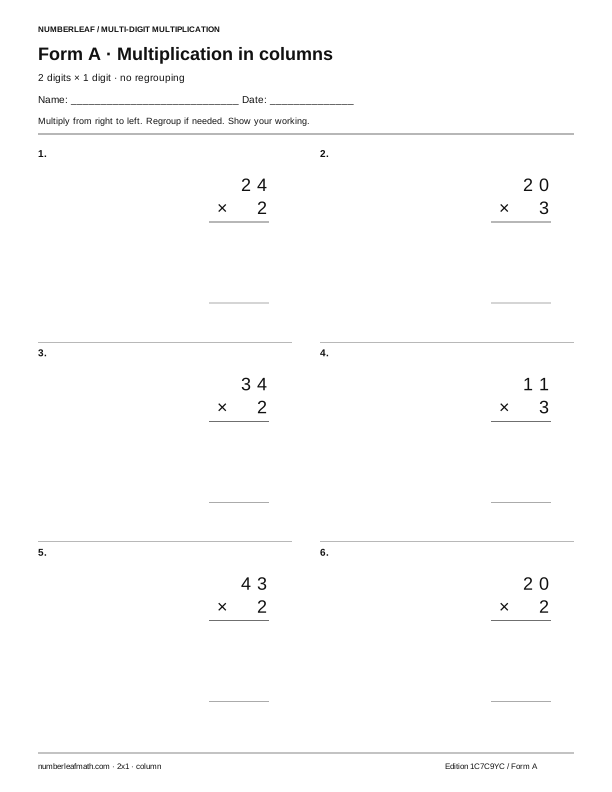
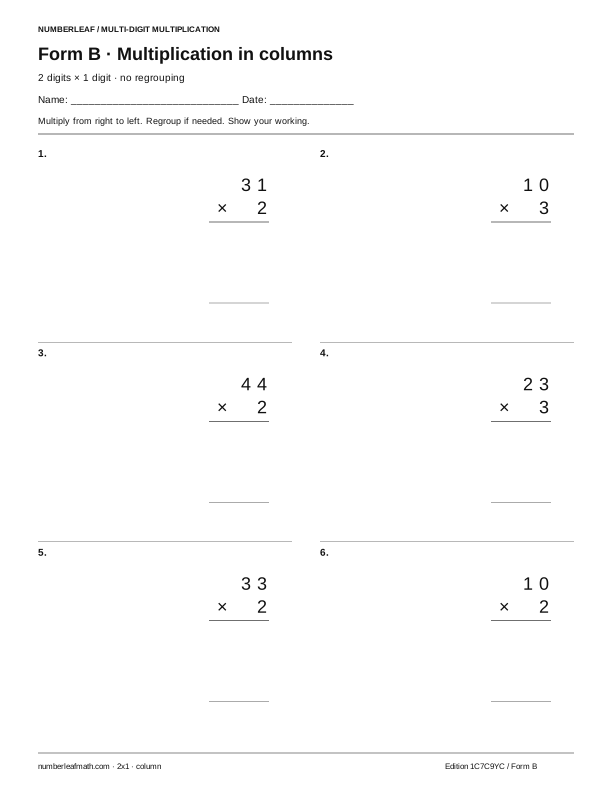
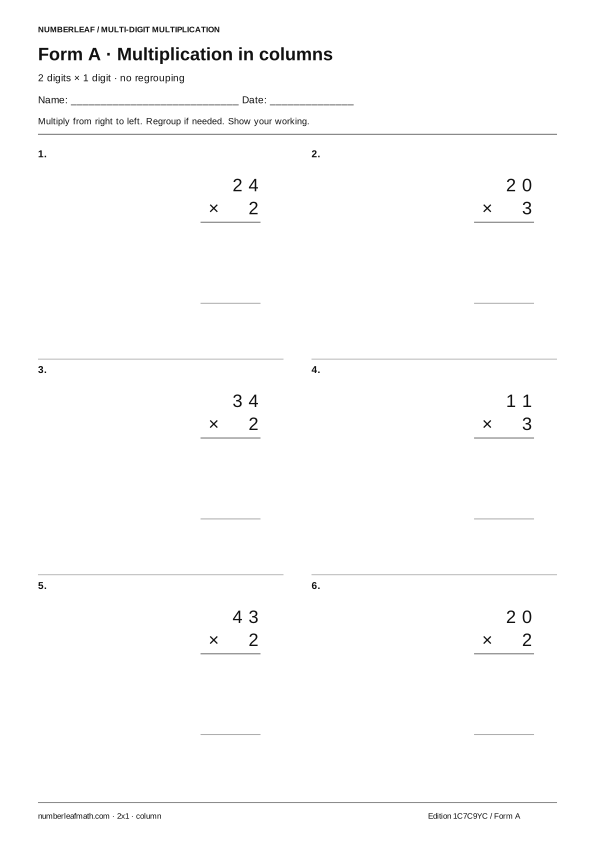
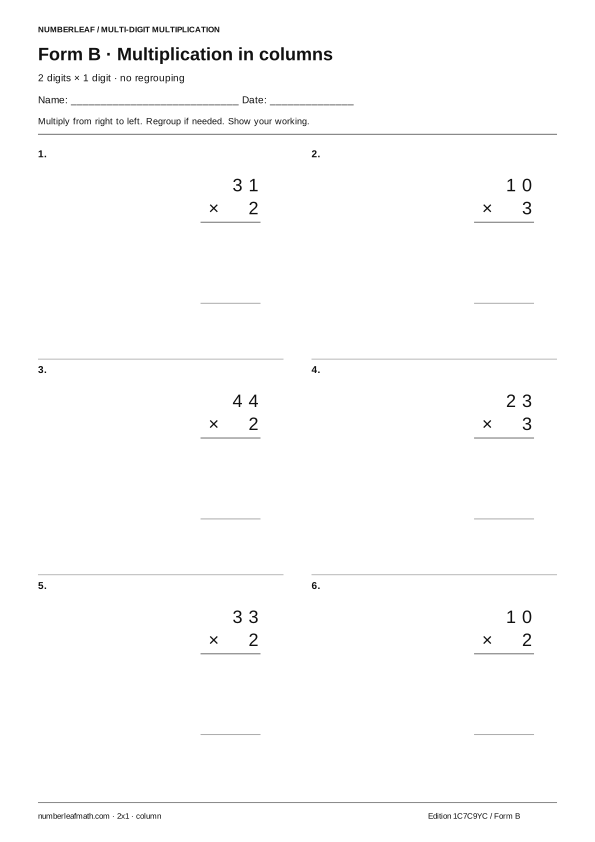
Form A begins with 24 × 2Form B begins with 31 × 2
Work through 24 × 2
- 2 groups of 4 ones make 8 ones. Write 8 in the ones place.
- 2 groups of 2 tens make 4 tens. Write 4 in the tens place.
Check by splitting 24 into 20 + 4. The two products are 40 and 8. Together they make 48.
READY TO PRINT
6 problems per form · Separate keys
SET 02
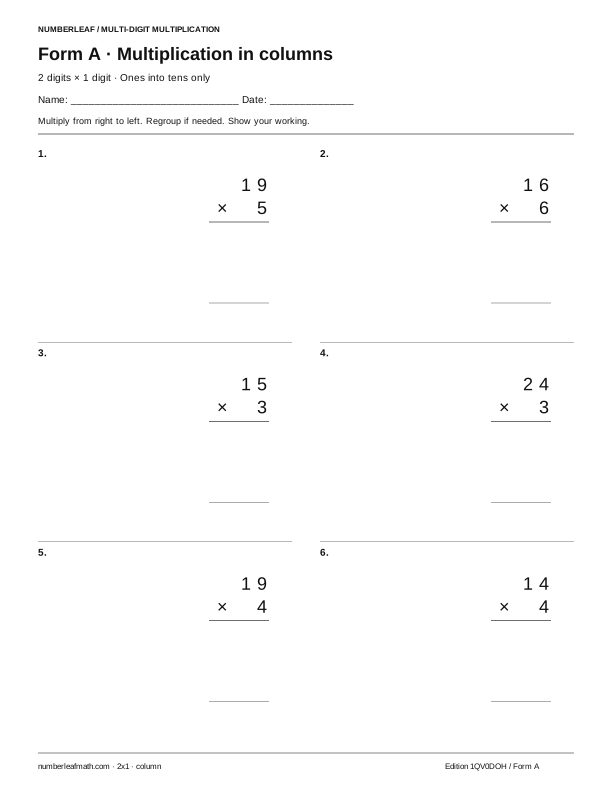
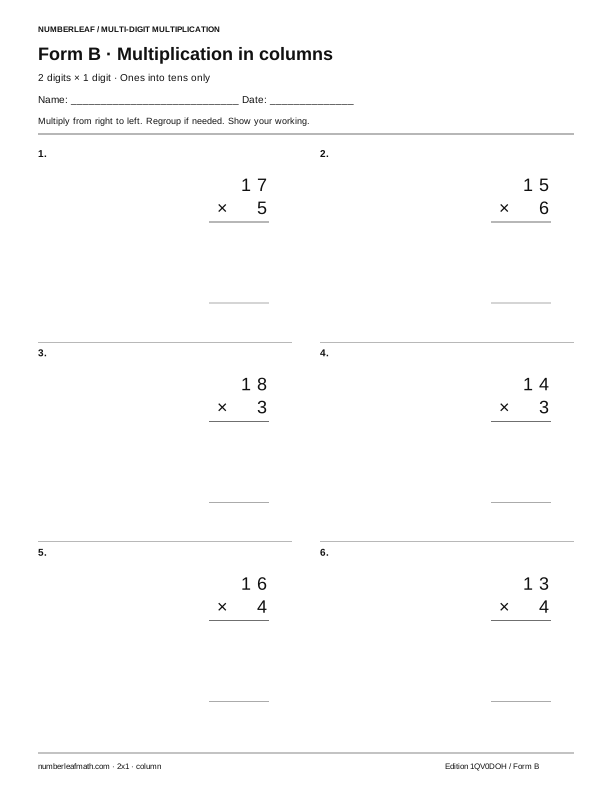
Regroup ones into tens
Choose this set to practise adding the carry to the tens. Every final answer still has two digits.
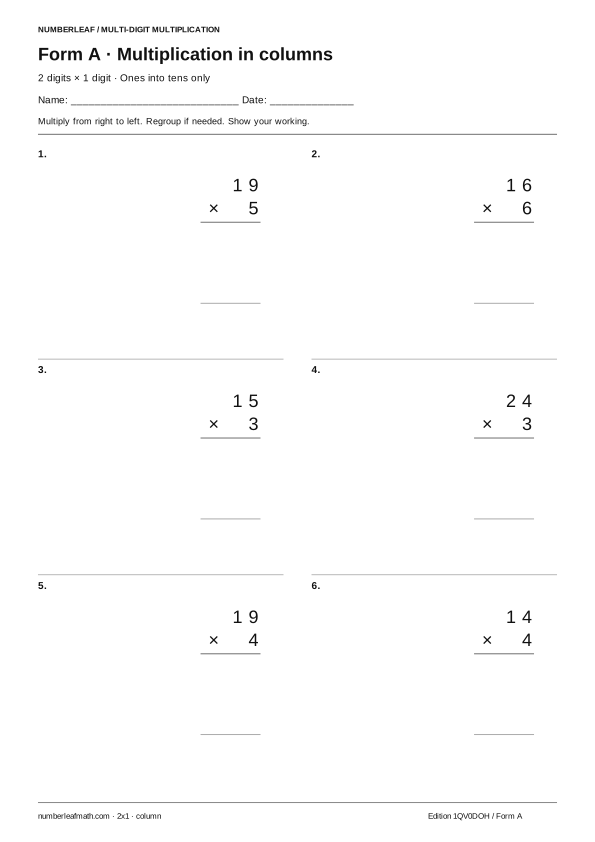
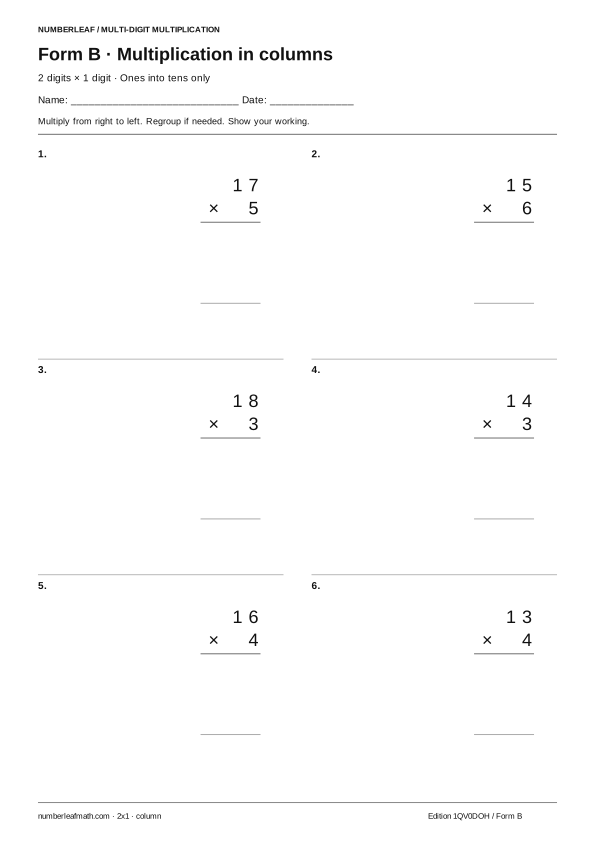
Form A begins with 19 × 5Form B begins with 17 × 5
Work through 19 × 5
- 5 groups of 9 ones make 45 ones. Exchange 40 ones for 4 tens. Write 5 in the ones place.
- 5 groups of 1 ten, plus 4 tens carried in, make 9 tens. Write 9 in the tens place.
Check by splitting 19 into 10 + 9. The two products are 50 and 45. Together they make 95.
READY TO PRINT
6 problems per form · Separate keys
SET 03
Regroup tens into hundreds
Choose this set when the learner stops after writing two digits. The ones stay in place, but the tens make at least one hundred.
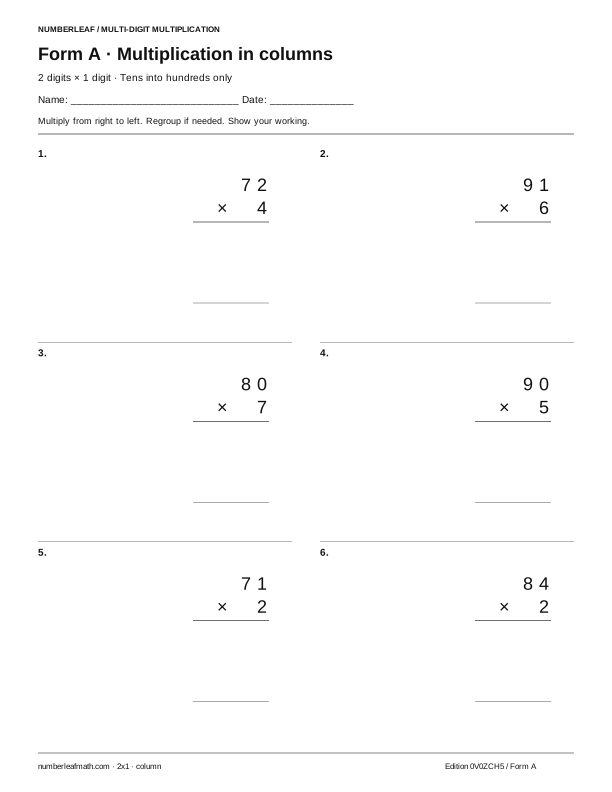
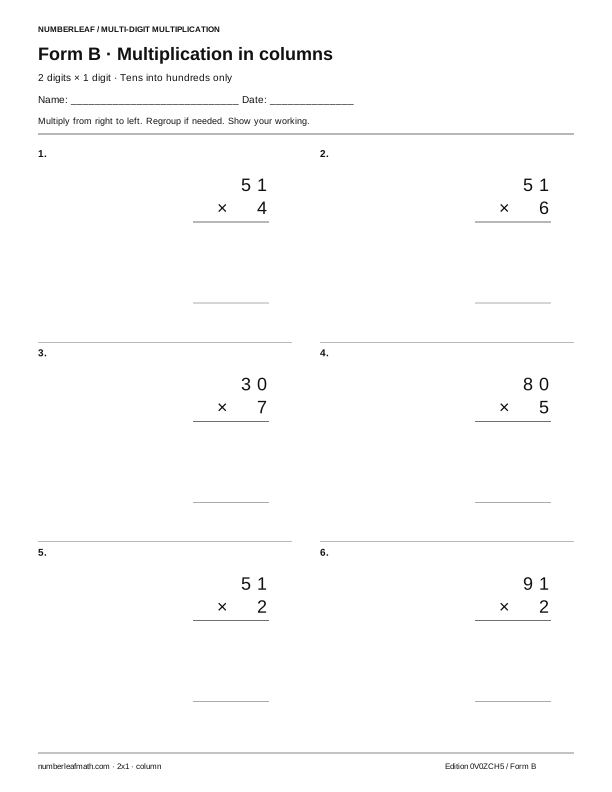
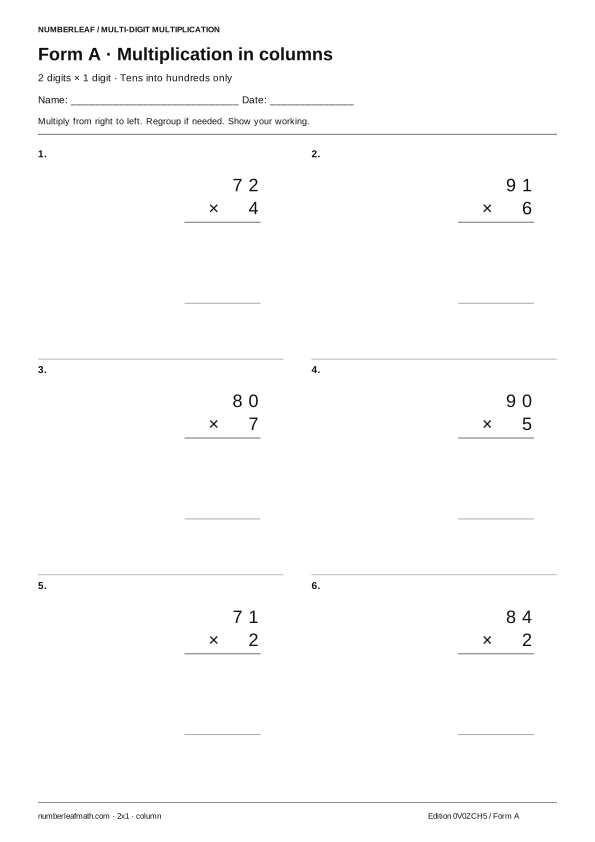
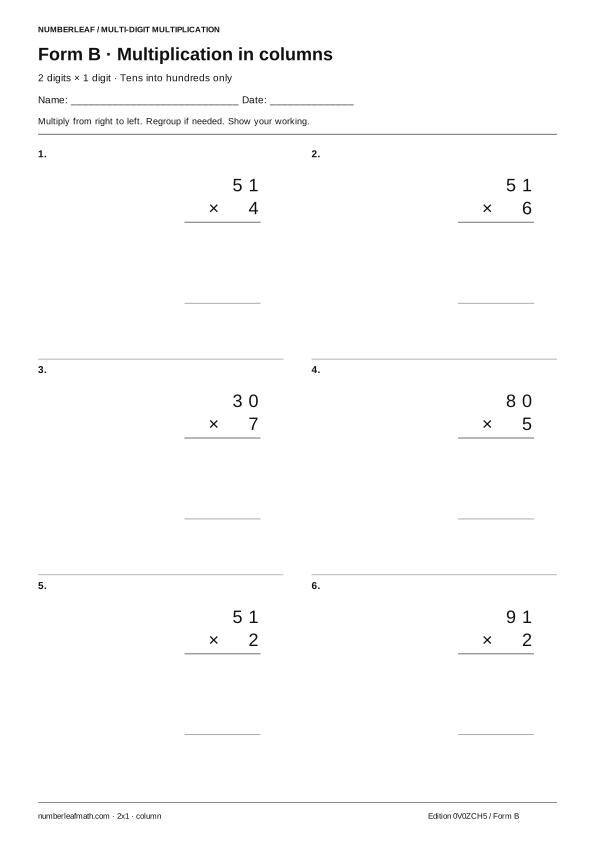
Form A begins with 72 × 4Form B begins with 51 × 4
Work through 72 × 4
- 4 groups of 2 ones make 8 ones. Write 8 in the ones place.
- 4 groups of 7 tens make 28 tens. Exchange 20 tens for 2 hundreds. Write 8 in the tens place.
Check by splitting 72 into 70 + 2. The two products are 280 and 8. Together they make 288.
READY TO PRINT
6 problems per form · Separate keys
SET 04
Regroup in both columns
Use this after both exchanges make sense separately. A carry goes into the tens and another goes into the hundreds.
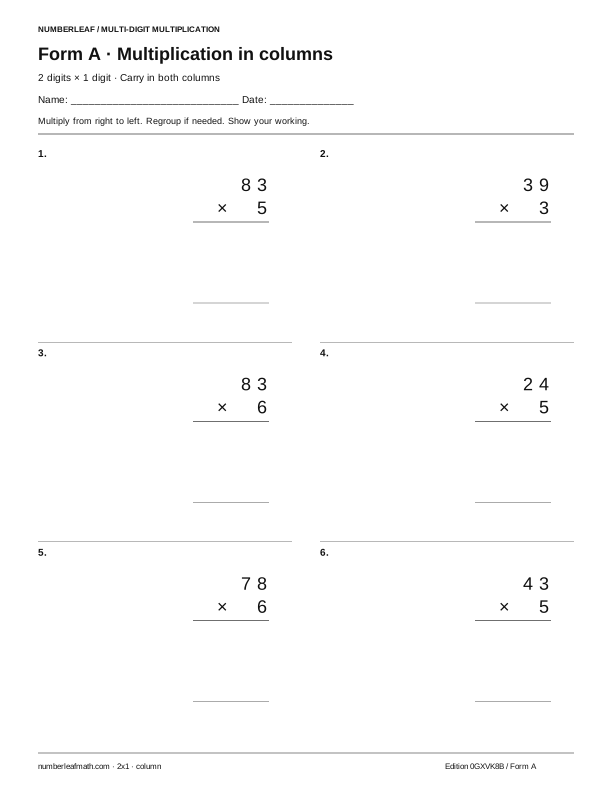
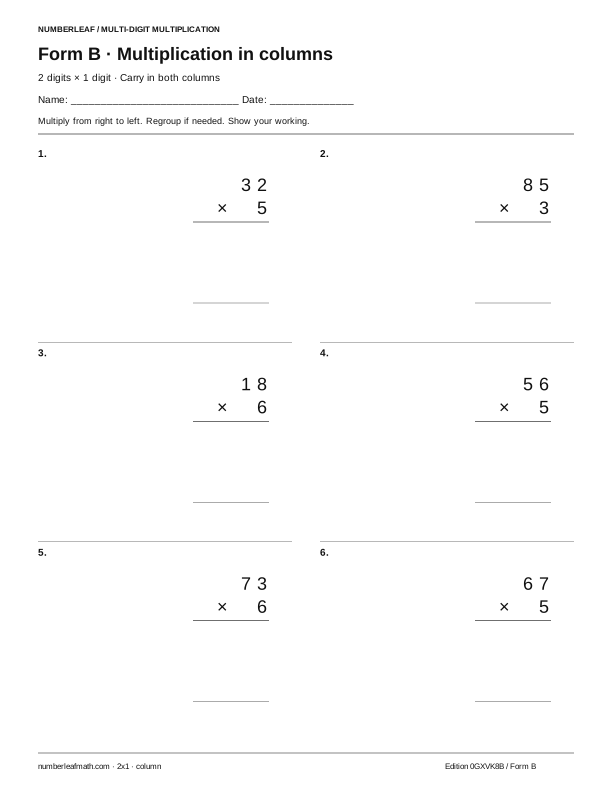
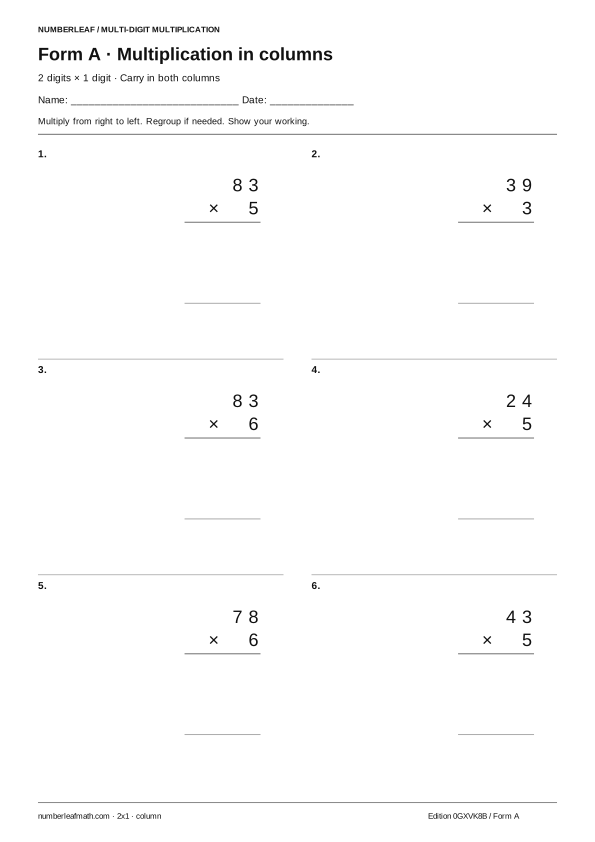
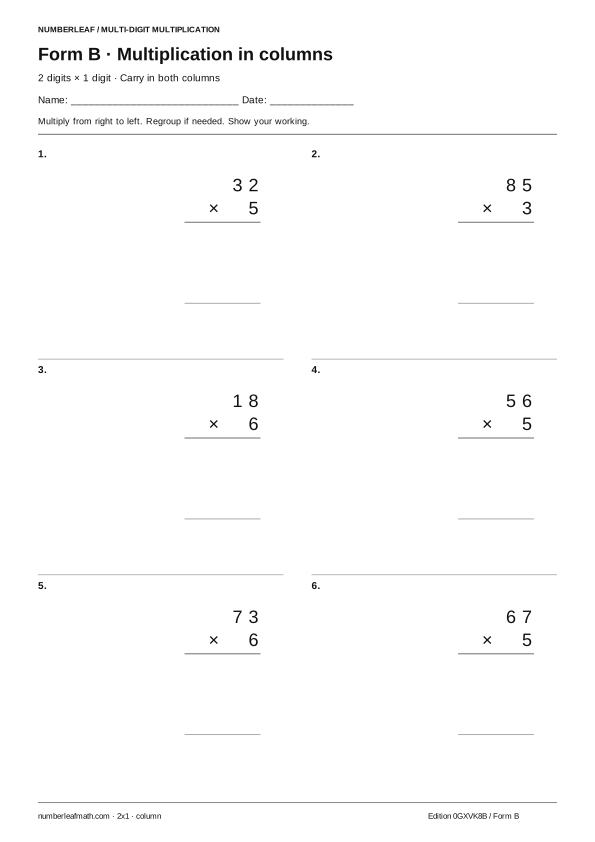
Form A begins with 83 × 5Form B begins with 32 × 5
Work through 83 × 5
- 5 groups of 3 ones make 15 ones. Exchange 10 ones for 1 ten. Write 5 in the ones place.
- 5 groups of 8 tens, plus 1 ten carried in, make 41 tens. Exchange 40 tens for 4 hundreds. Write 1 in the tens place.
Check by splitting 83 into 80 + 3. The two products are 400 and 15. Together they make 415.
READY TO PRINT
6 problems per form · Separate keys
AFTER FOCUSED PRACTICE
Mix all four carry patterns
Choose 12 questions for more writing space or 24 for a fuller page. Each problem number on Form B targets the same carry positions as Form A. On the teacher PDF, select a carry group to open its practice sheets.
SET 05
Mixed practice · 12 problems
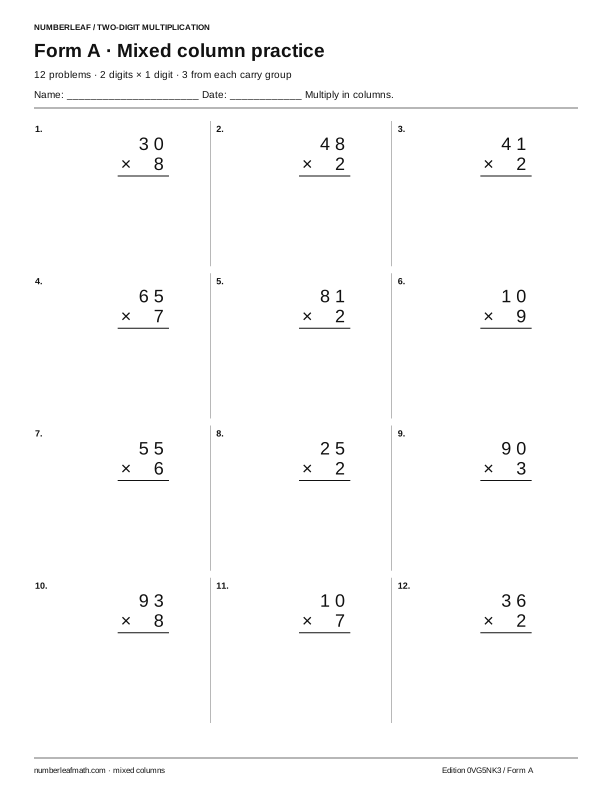
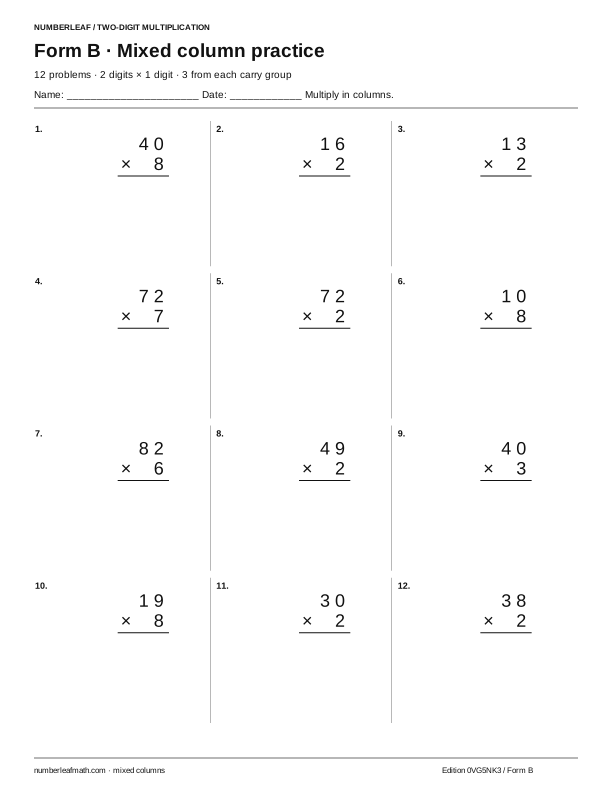
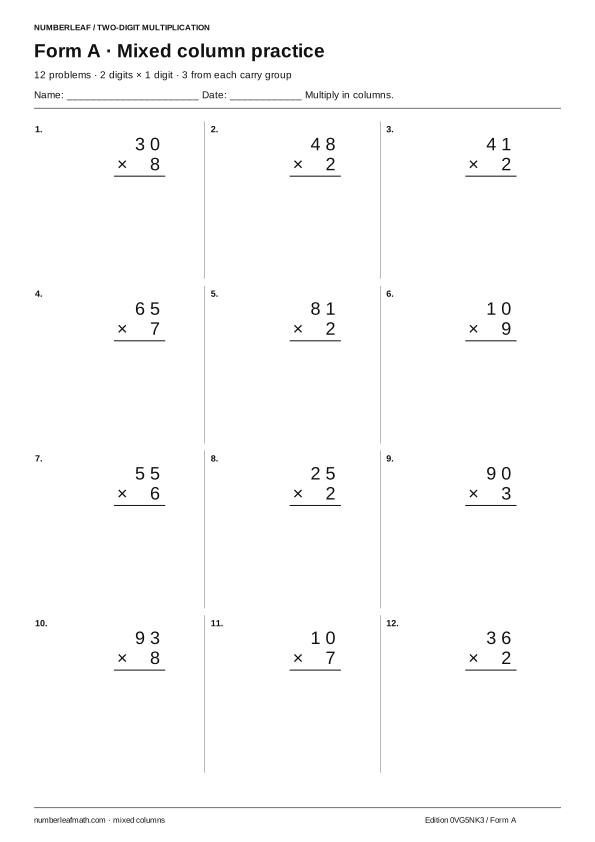
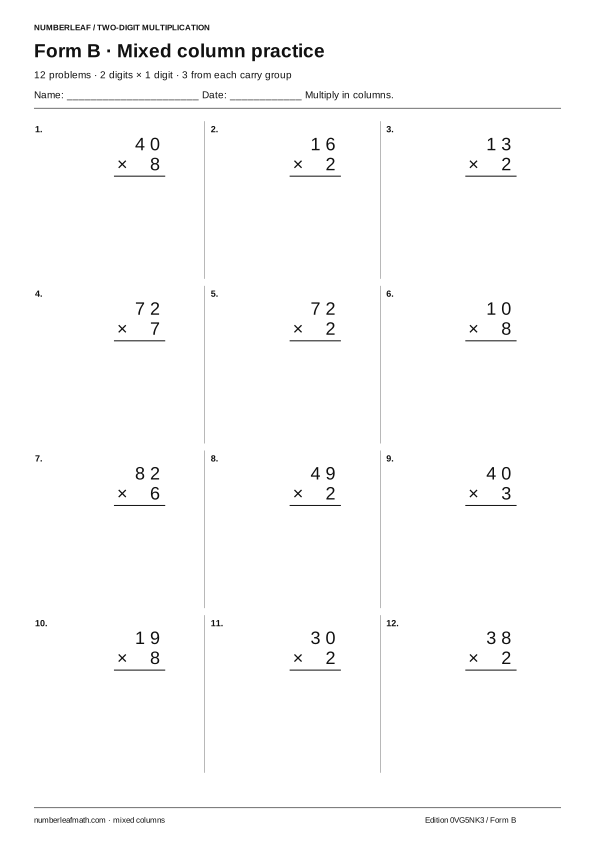
Give each calculation more room. Each form mixes three problems from each of the four carry groups.
Form A begins with 30 × 8Form B begins with 40 × 8
Work through 30 × 8
- 8 groups of 0 ones make 0 ones. Write 0 in the ones place.
- 8 groups of 3 tens make 24 tens. Exchange 20 tens for 2 hundreds. Write 4 in the tens place.
Check by splitting 30 into 30 + 0. The two products are 240 and 0. Together they make 240.
READY TO PRINT
12 problems per form · Separate keys
SET 06
Mixed practice · 24 problems
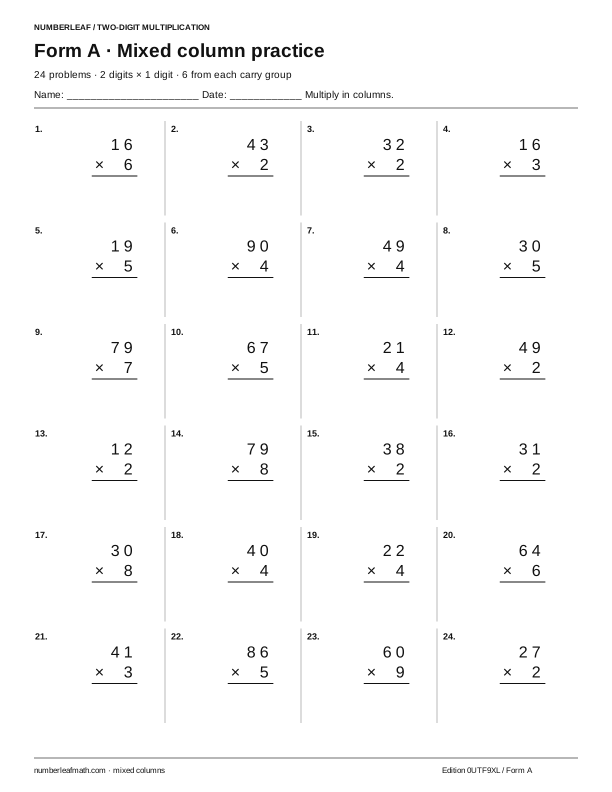
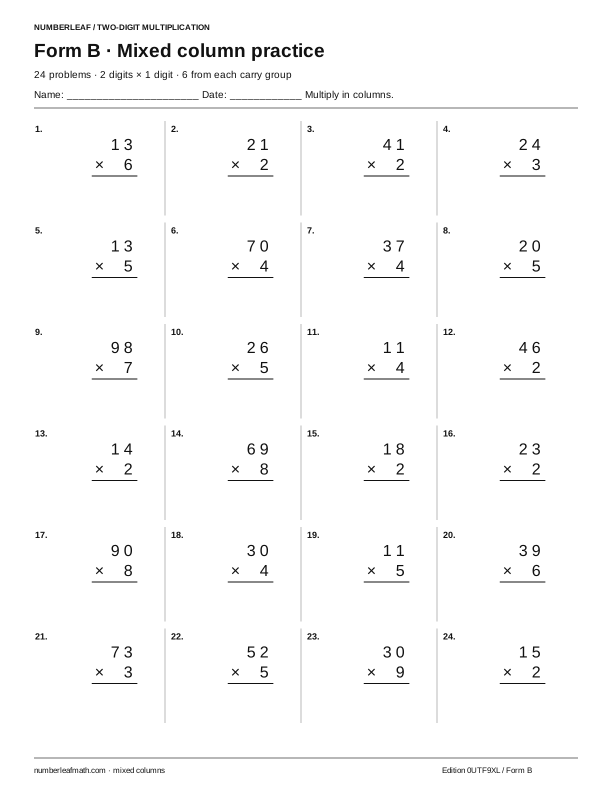
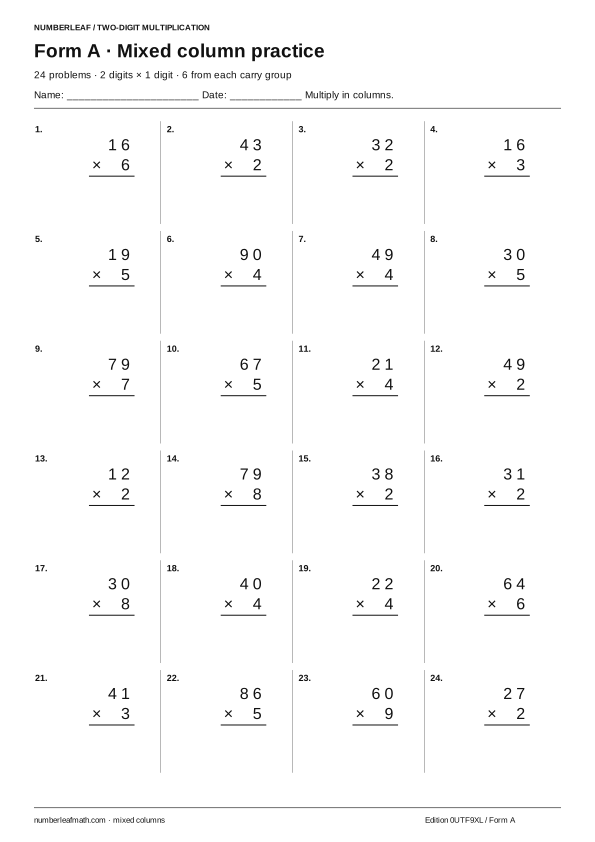
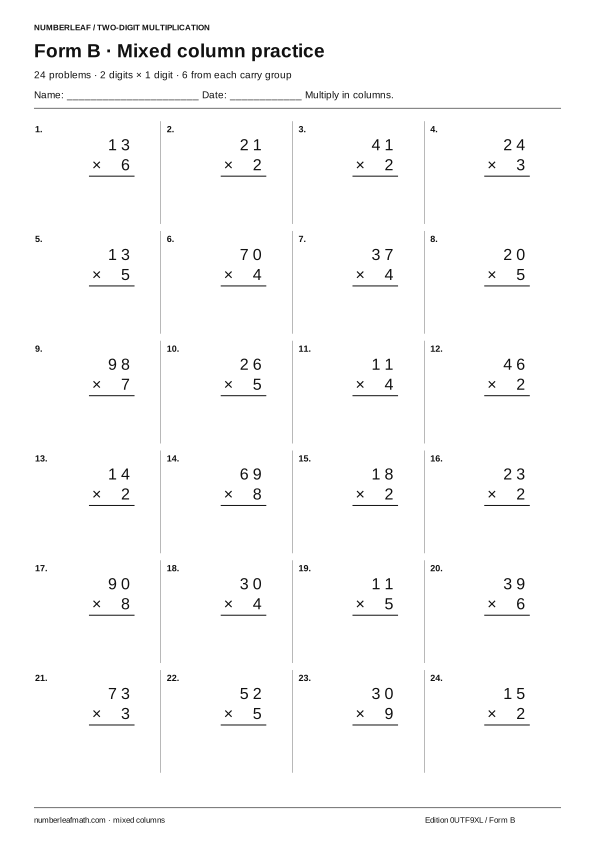
Use one compact page for independent practice. Each form mixes six problems from each carry group. The teacher key lists the question numbers in each group.
Form A begins with 16 × 6Form B begins with 13 × 6
Work through 16 × 6
- 6 groups of 6 ones make 36 ones. Exchange 30 ones for 3 tens. Write 6 in the ones place.
- 6 groups of 1 ten, plus 3 tens carried in, make 9 tens. Write 9 in the tens place.
Check by splitting 16 into 10 + 6. The two products are 60 and 36. Together they make 96.
READY TO PRINT
24 problems per form · Separate keys